
How to Practise with a Metronome — 4 Steps to Rock-Solid Drum Time


Everyone says “practise with a metronome”, but switch one on and the click either disappears under your playing or you keep drifting ahead or behind. A metronome works when you use it in stages.
- Step 1 — lock to a click on every beat
- Step 2 — hear the click as 2 and 4
- Step 3 — hear the click on the “and”
- Step 4 — silent bars
Step 1 — bury the click
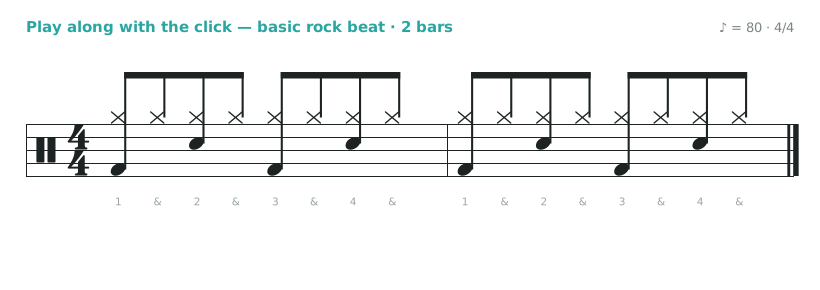
Set the click to quarter notes and play the basic rock beat. The goal is to line up so precisely that the click disappears. If you can hear it clearly, you’re ahead or behind.
Step 2 — click on 2 and 4
Halve the metronome tempo and treat each click as beats 2 and 4, so it lines up with your snare. You have to supply 1 and 3 yourself, which builds your own sense of time.
Step 3 — click on the off-beat
Now hear the click as the “and”. It twists your brain at first, but once it works you’ll stay steady no matter where the click falls. Start by hearing it as “1”, then shift your feel to the “and”.
Step 4 — silent bars
Use your app’s muted bars feature (say, two bars on, two bars off). Hold the tempo through the silence; if you land exactly with the click when it returns, you nailed it.
Listen to the click in headphones and play slightly softer than usual. You can only lock to what you can hear. On an electronic kit, just balance it with the module volume.
After the metronome: real songs
Once the click feels natural, move on to playing along with original tracks. Real drums carry more information than a click, which makes it harder and more fun. Connect an electronic kit to DrumMate and every bar is scored for timing even when you play along with the song.